


Can scalp psoriasis cause hair loss? Yes. A flare can contribute to shedding and breakage, and removing thick scales can pull hairs out. Hair loss linked to a flare is usually temporary, and hair often grows back once the psoriasis is under control.
It can be frustrating to see fewer flakes and feel less itch while your hair still looks thin. Scalp symptoms can improve before your hair looks fuller. If thinning continues, worsens, or appears in new patches, a dermatologist can check for another cause.
My Scalp Looks Better. Why Is My Hair Still Thin?
Your Scalp and Hair Recover Differently
What can improve first. Redness, itching, and scaling may ease while hair shed during the flare is still being replaced.
What can take longer. Even if less hair is coming out in the shower, new growth may need more time to make your hair look fuller.
Hair Breakage May Be Part of the Problem
Shorter, broken strands can leave your hair looking less full while it grows out. You may also have experienced a combination of shedding and breakage during your flare.
Another Condition Could Be Contributing to Your Hair Loss
If hair thinning continues as your scalp improves, something else may be contributing. Possible causes include the following.
- Pattern hair loss: Gradual thinning related to genetic and hormonal factors.
- Alopecia areata: An autoimmune condition that can produce distinct areas of hair loss.
- Telogen effluvium from another trigger: Significant illness, stress, or other physiological changes can contribute to shedding.
- Nutritional or thyroid-related conditions: Certain deficiencies and medical conditions may affect hair growth.
- Medication-related hair loss: Some medicines can contribute to shedding. If it started after a medication change, bring that up with your clinician before changing or stopping treatment.
When addressing hair loss, a dermatologist can help identify whether it is related to psoriasis, another condition, or a combination of factors. See the American Academy of Dermatology’s guide to diagnosing hair loss.
Can Scalp Psoriasis Cause Hair Loss?
Scalp psoriasis is a chronic inflammatory skin condition that causes skin cells to build up more quickly than normal. The result is thick, scaly patches known as plaques, which may cause itching, dryness, redness, or soreness.
For people experiencing scalp psoriasis, inflammation around hair follicles can contribute to shedding. Scratching and pulling at scales can also damage or dislodge hair.
According to the American Academy of Dermatology (AAD), scratching the scalp and forcefully removing scales can lead to temporary hair loss. Hair usually grows back after the psoriasis clears.
Many patients with psoriasis on the scalp experience no hair loss. When hair looks thinner, more than one process can be involved.
Three Ways a Psoriasis Flare Can Affect Your Hair
Hair loss during a scalp psoriasis flare can result from shedding, breakage, or hairs pulled away with scales. More than one can happen during the same flare.
Shedding, hair shaft breakage, and hairs pulled away with scale.
1. Hair Shedding Due to Scalp Inflammation
Your hair naturally moves through a repeating cycle of growth, transition, rest, and shedding.
Inflammation during a flare can shift more hairs than usual into the resting phase. Those hairs later shed from their follicles, a process called telogen effluvium. Shedding can be concentrated around plaques. More widespread shedding can occur, especially with severe psoriasis.
A 2025 dermatology review examined the relationship between psoriasis and different forms of hair loss. The researchers identified inflammation-related shedding as an important mechanism in psoriasis-associated alopecia.
A follicle can shed a hair and still produce new growth.
2. Hair Breakage From Scratching and Dryness
Plaques can be intensely itchy. Scratching may bring brief relief, but repeated rubbing can irritate the scalp and damage hair.
Dry hair can be more fragile, especially with harsh hair care practices.
Breakage happens when the hair shaft snaps somewhere along its length. Your hair can look less full while the follicles continue to produce hair. Short strands can be broken hairs or new growth, so strand length alone is a poor guide to the cause.
Gentle washing, conditioning, and styling can help limit breakage during a flare.
3. Hairs Pulled Out With Psoriasis Scales
Thick scales can build up on plaques.
These scales can become entangled with hair, making it tempting to pick, scrape, or brush them away.
Unfortunately, forcibly removing scales can pull out hairs along with them.
The AAD specifically cautions against aggressive scale removal, which can loosen hair and aggravate the underlying psoriasis.
If you've ever removed a thick scale and noticed several hairs attached, this may help explain what happened. Hairs coming away with a scale can occur even when the follicles remain intact. If scales are hard to loosen, ask a dermatologist about gentle ways to soften them.
Will Hair Grow Back After Scalp Psoriasis?
In most cases, hair loss caused by scalp psoriasis is temporary. Hair can often regrow once the flare is under control if the follicles remain intact. Both the American Academy of Dermatology and a clinical review of psoriatic alopecia describe regrowth as the usual outcome.
Can Scalp Psoriasis Cause Permanent Hair Loss?
In rare cases, chronic or recurring scalp psoriasis can be associated with scarring alopecia. Scarring can permanently damage hair follicles. A dermatologist can check for it if hair loss is worsening or there are changes in the affected skin.
How Long Does Hair Regrowth Take?
There's no single timeline that applies to everyone.
Recovery depends on factors such as the type of hair loss, the health of the follicles, whether the psoriasis is adequately controlled, and whether another condition is contributing to thinning.
Ongoing shedding, worsening thinning, or new bald patches are reasons to get checked.
Scalp Psoriasis, Dandruff, and Seborrheic Dermatitis
Scalp psoriasis, dandruff, and seborrheic dermatitis can all cause itching and flakes.
| Condition | Common clues |
|---|---|
| Scalp psoriasis | Commonly produces thicker, more defined plaques with dry, sometimes silvery scales. Patches may extend beyond the hairline. |
| Dandruff | Is a mild form of seborrheic dermatitis that generally causes loose flakes with little or no visible inflammation. |
| Seborrheic dermatitis | Can cause greasy or yellowish scales and inflamed skin. It may also affect the eyebrows, the sides of the nose, or the skin behind the ears. |
Psoriasis and seborrheic dermatitis can overlap, and mild psoriasis can look like dandruff. If you're seeing thinning or bald patches along with flakes, a dermatologist can check what's causing both. See Mayo Clinic's comparison and DermNet's guide to seborrheic dermatitis.
When Should You See a Dermatologist About Hair Loss?
Make an appointment with a dermatologist if you notice any of the following.
- Hair thinning that continues after the flare improves.
- Sudden or clearly defined bald patches.
- Increasing shedding without an obvious explanation.
- Pain, bleeding, sores, or persistent inflammation on your scalp.
- Changes in scalp texture where hair is thinning.
- Hair loss extending beyond the areas affected by psoriasis.
Seek prompt care if a patch is painful and swollen or is draining pus. Scalp infections such as scalp ringworm can cause patchy hair loss and need a different treatment.
A dermatologist can look closely at your scalp and hair, review your medical history and medications, and order tests if needed to check for other causes.
How to Care for Your Scalp Without Making Hair Loss Worse
Gentle hair care can help reduce irritation and limit avoidable damage that can lead to hair loss.
-
Avoid Scratching and Picking
Scratching can aggravate psoriasis, irritate the scalp, and loosen or break hairs.
Keeping your fingernails short and smooth may help reduce accidental damage, particularly if you scratch without realizing it.
If scalp itching is difficult to control, consider discussing additional symptom-relief options with your dermatologist.
-
Be Gentle When Washing Your Hair
Massage shampoo in gently with your fingertips.
Choose hair-care products that don't aggravate your symptoms, and follow the directions for any medicated shampoo or scalp treatment.
A conditioner can help reduce dryness and make hair easier to manage.
-
Don't Forcefully Remove Scales
It may be tempting to scrape away thick plaques, especially when they begin to loosen.
However, picking and scraping can irritate the skin and pull out hairs.
Dermatologists sometimes recommend scale-softening treatments, including products containing salicylic acid, to help loosen stubborn buildup.
Follow the product instructions and avoid trying to remove scales by force.
-
Limit Harsh Styling Practices
High heat, tight hairstyles, vigorous brushing, and irritating styling products can place additional stress on your hair and scalp.
Consider air-drying when practical, avoiding excessive tension, and minimizing styling practices that cause discomfort.
These habits can help limit breakage and irritation.
Scalp Psoriasis Treatment Options
The right scalp psoriasis treatment depends on the severity and location of the plaques. Depending on the product, topical treatments such as lotions, gels, foams, or medicated shampoos can help in different ways.
- Calm inflammation. Some topical treatments reduce inflammation in psoriasis plaques.
- Slow excess skin-cell growth. Certain treatments help limit the buildup of thick plaques.
- Soften thick scales. Scale softeners can loosen buildup so treatment can reach the scalp.
How quickly scalp symptoms improve depends on the treatment and the individual. A dermatologist can help choose an approach that suits your symptoms and hair. See the American Academy of Dermatology’s guide to scalp psoriasis treatments.
Managing Scalp Itch While Treating Psoriasis
Even when you know scratching can make things worse, resisting the urge isn't always easy. If itching is hard to manage, ask your dermatologist how to relieve it alongside your psoriasis care.
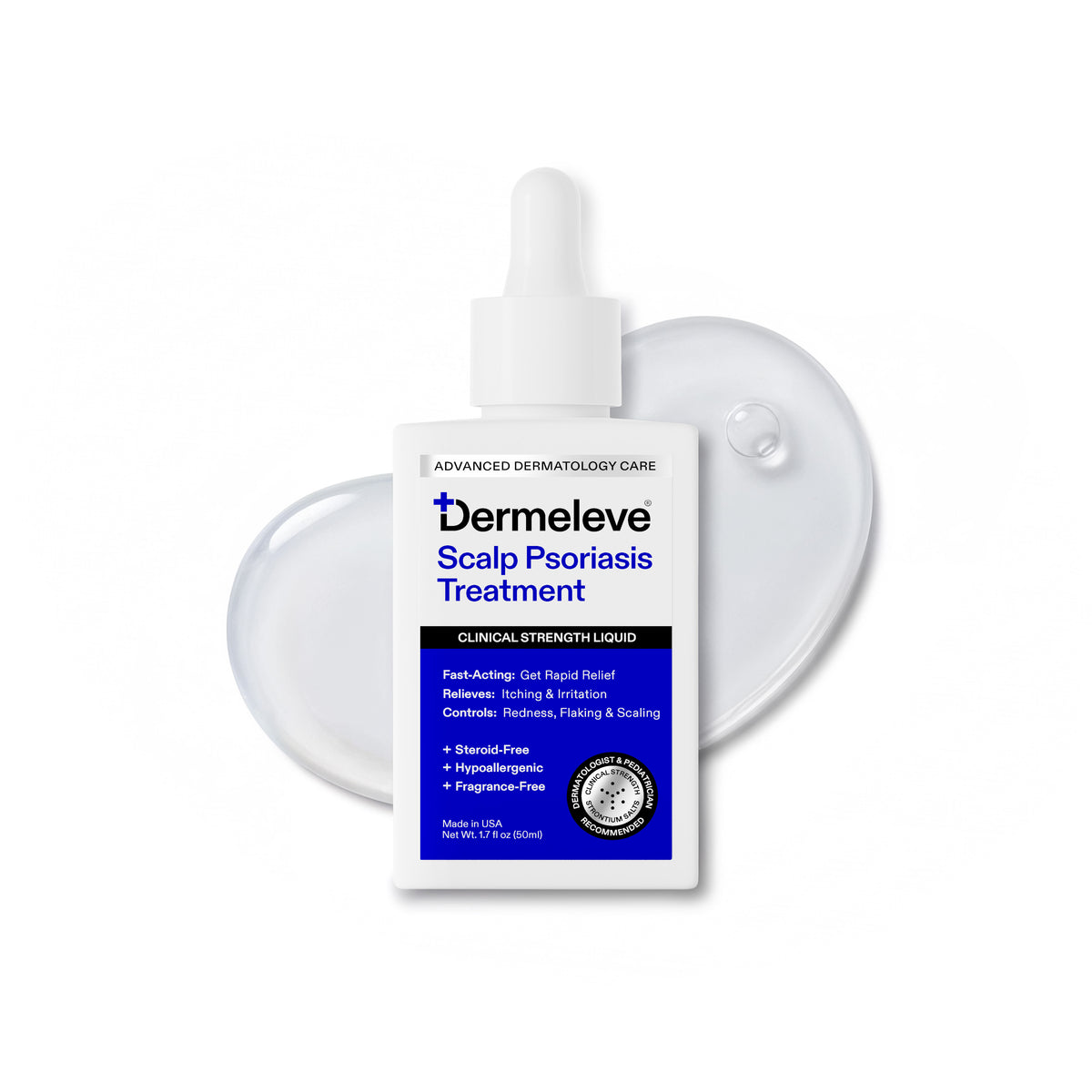
Dermeleve Scalp Psoriasis Treatment is an over-the-counter option for relief of scalp itch associated with psoriasis. Follow the Drug Facts label when using it.
Frequently Asked Questions
Can scalp psoriasis cause permanent hair loss?
Most psoriasis-associated hair loss is temporary, but rare cases of scarring alopecia can cause permanent follicle damage. Persistent or patchy hair loss should be evaluated by a dermatologist.
Does scratching scalp psoriasis make hair loss worse?
Scratching can irritate the scalp, loosen hairs, and contribute to breakage. Forcefully removing psoriasis scales can also pull out hairs.
Why is my hair still thin after my scalp psoriasis improves?
Your scalp symptoms may improve before the visible effects of earlier shedding or breakage resolve. Continued thinning can also have another cause, such as pattern hair loss or alopecia areata. A scalp exam can help identify the cause.
Is psoriasis-related hair loss the same as alopecia areata?
Alopecia areata is an autoimmune condition that often causes sudden, round patches of hair loss. It can occur alongside scalp psoriasis.
Can dandruff cause hair loss?
Dandruff can make your scalp itchy. If you also notice persistent thinning or bald patches, get your scalp checked for another cause.
Can psoriasis treatments cause hair loss?
Some psoriasis treatments can occasionally contribute to hair shedding. This has been reported with certain systemic medicines, and the shedding may appear after a delay rather than when treatment starts. It is often temporary, but the cause and what to do depend on the medicine and your circumstances. If you notice new or worsening shedding after a treatment change, tell your prescriber. Do not stop or change a prescribed treatment without discussing it with them first.
Medical References
- American Academy of Dermatology. Scalp psoriasis: 10 ways to reduce hair loss.
- Cleveland Clinic. Psoriasis Hair Loss: How to Treat and Reduce.
- Pourani MR, et al. (2025). Psoriasis and Alopecia: Unveiling the Links. Dermatology Practical & Conceptual.
- George SMC, et al. (2015). Psoriatic Alopecia. Clinical and Experimental Dermatology.
- DermNet. Scalp psoriasis.
- Mayo Clinic. Scalp psoriasis vs. seborrheic dermatitis.
- American Academy of Dermatology. Hair loss: Diagnosis and treatment.
- National Library of Medicine. Dermeleve Scalp Psoriasis Treatment: OTC Drug Label.
This article is for educational purposes and is not a substitute for professional medical advice, diagnosis, or treatment.